
Stop Telling AI What to Build. Start Showing It a Plan.

Why Kiro is changing the way software gets made, and why it matters even if you've never written a line of code
There's a problem with the way most people use AI to build software right now. You describe what you want, the AI writes some code, you describe what's wrong, it rewrites it, and somewhere down the line you end up with something that almost works but drifts further and further from what you actually had in mind.
It's a bit like briefing a builder by text message. You say "I want a kitchen extension," they crack on, and three weeks later you've got something structurally sound that isn't quite what you pictured. Not because the builder was bad, but because no one sat down and drew a proper plan first.
That's the gap Kiro was built to close.
So, what is Kiro?
Kiro is a tool made by Amazon, launched in mid-2025, that helps people build software in a more structured, reliable way using AI. Think of it as the workspace where code gets written, except this one has a brain, a memory, and a method.
It's free to try, works on Mac, Windows and Linux, and you don't need an Amazon account to get started. Paid plans start from around £16 a month for more regular use.
What makes Kiro different isn't just that it uses AI to help write code. Plenty of tools do that now. What sets it apart is how it goes about it.
The problem with "just ask the AI"
If you've used any AI chatbot to help with a task like writing an email or summarising a document, you'll know that the results can be brilliant one moment and bewildering the next. The AI doesn't always know what you actually mean. It works off what you literally said, and those two things aren't always the same.
In software development, that gap is amplified. A small misunderstanding at the start can send a whole project in the wrong direction. Developers call this "drift," where what gets built slowly diverges from what was wanted.
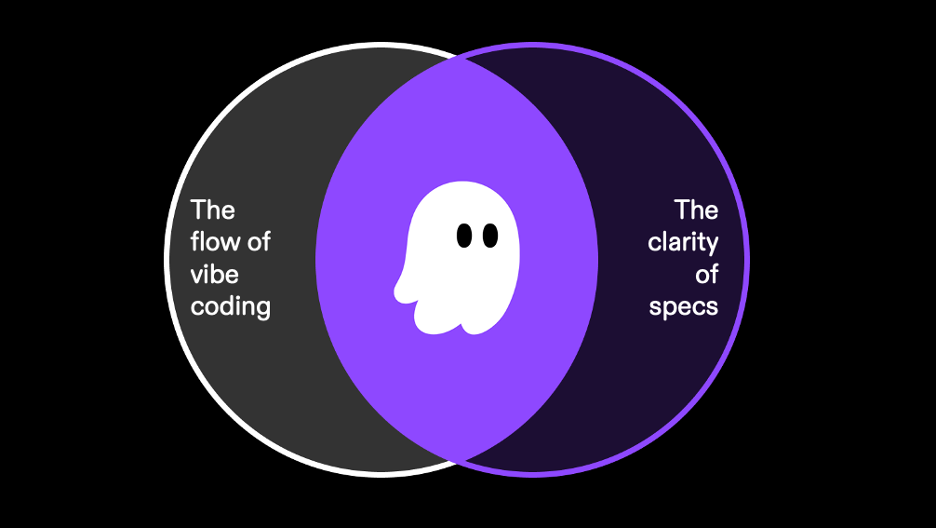
Some people have started leaning into this uncertainty, using AI to dash off quick prototypes without much planning. In developer circles this is sometimes called "vibe coding," just prompting away and seeing what comes out. It's fast and fun, but it tends to produce messy results that fall apart when things get complicated.
Kiro sits at the other end of that spectrum.
What "spec-driven" actually means
Before Kiro starts building anything, it creates a spec. A spec is a structured written plan.
You describe your idea in plain language, something like "I want a way for my customers to book appointments online and get an email reminder," and Kiro turns that into three organised documents:
- What it needs to do. A clear list of requirements written in plain terms, so everyone is on the same page about what success looks like.
- How it should be built. The structural decisions about how the pieces fit together, based on sound engineering practice.
- What needs to happen, in what order. A step-by-step plan for actually building it.
None of this requires you to be technical. You're writing a brief, not writing code. Kiro takes that brief and builds the plan from it.
The AI then works within that plan. Every decision it makes ties back to the original requirements. If something doesn't fit the spec, Kiro flags it rather than forging ahead.
Why does that matter?
Think about the difference between commissioning a custom piece of furniture with proper drawings versus asking a carpenter to "just make something nice."
With a proper plan, you get what you asked for. Changes are easier to make early, before the wood is cut. And when something goes wrong, you can point at the plan and say "this is what we agreed."
Kiro brings that same discipline to software. A few of the concrete benefits:
You stay in control. Because the spec exists as readable documents rather than code buried in a file, you can review what's been planned before anything gets built. You can say "that's not right" before any work has started, not after.
It handles the routine work automatically. Kiro doesn't just write code. It also produces the documentation (notes explaining what each part does) and the tests (checks that confirm it works). These are things developers frequently skip under time pressure, and their absence tends to cause significant problems further down the line.
It doesn't forget. Because the spec exists, Kiro always has a reference point. It isn't working from a chat history that gets muddled over time. It understands the intent of the project from start to finish.
It shortens delivery timelines. At Delta Airlines, whose team shared their experience at Amazon's developer conference in late 2025, Kiro helped turn what used to be weeks of planning meetings into hours. Business managers with no coding experience were able to participate directly in design sessions, because the spec made the plan readable to everyone in the room.
This isn't just for developers
That Delta Airlines example is worth dwelling on. Their team found that Kiro's approach wasn't just useful for the people writing code. It changed how the whole team worked together.
Product managers, operations leads, and business owners could look at a spec and understand exactly what was being built. They could identify problems before they became expensive to fix. They could make decisions with genuine confidence rather than taking someone's word for it.
That's one of the more significant aspects of spec-driven development: it creates a shared language between technical and non-technical people. The spec is a document a developer can execute against, but it's also something a business owner can read, question, and shape.
If you've ever felt that software projects are a black box, where you hand over a brief, money changes hands, and something mysterious happens until a product (hopefully) gets delivered, that's a communication problem as much as a technical one. Kiro addresses both.
Two modes: planned or exploratory
Kiro offers two ways to work.
Spec mode is the structured approach described above. Plan first, build second. This is the right approach when you're building something real that people will use, or where getting it right matters more than getting it done quickly.
Vibe mode is faster and more freeform, useful for testing an idea, building a quick prototype, or exploring what's possible before committing to a direction. No plan, just prompting.
In practice, many teams use vibe mode to explore early and spec mode to build properly. The two sit well alongside each other.
What does it cost?
Kiro is free to get started, with 50 credits included, which is enough to try the spec-driven approach on a small project. Paid plans are:
- Pro at around £16/month with 1,000 credits
- Pro+ at around £32/month with 2,000 credits
- Power at around £160/month with 10,000 credits
New users also get a 30-day trial with 500 bonus credits, which is enough time to run a meaningful test of whether it fits your workflow.
Worth knowing about, even if you're not the one building
If you work with developers, manage digital projects, run a business that relies on software, or commission technical work from external teams, understanding what Kiro does changes what you should expect from the process and what questions you should be asking.
Spec-driven development isn't a new concept. Engineers and architects have worked from structured plans for as long as those professions have existed. What Kiro does is bring that rigour into the AI era, and make it accessible without requiring a technical background.
At United Workflows, we work with tools like Kiro as part of how we plan and deliver AI and automation projects for UK businesses. If you're thinking about a software build and want to understand how modern development practices could make it more predictable, we're happy to talk it through.